
Key takeaways
- A buyer-ready audience is defined by readers who recognize a real problem, feel its urgency now, and have started looking for a solution—not by a generic demographic profile.
- Two readers with similar demographics can have very different reasons for buying a book. Shared struggles matter more than shared statistics.
- Real searches, questions, and conversations can help authors shape a more relevant book than assumptions alone.
- The Buyer-Ready Audience Method offers a structured way to identify this reader before a single chapter is written.
- Testing reader assumptions early can reveal whether interest in a topic translates into readiness to explore a solution.
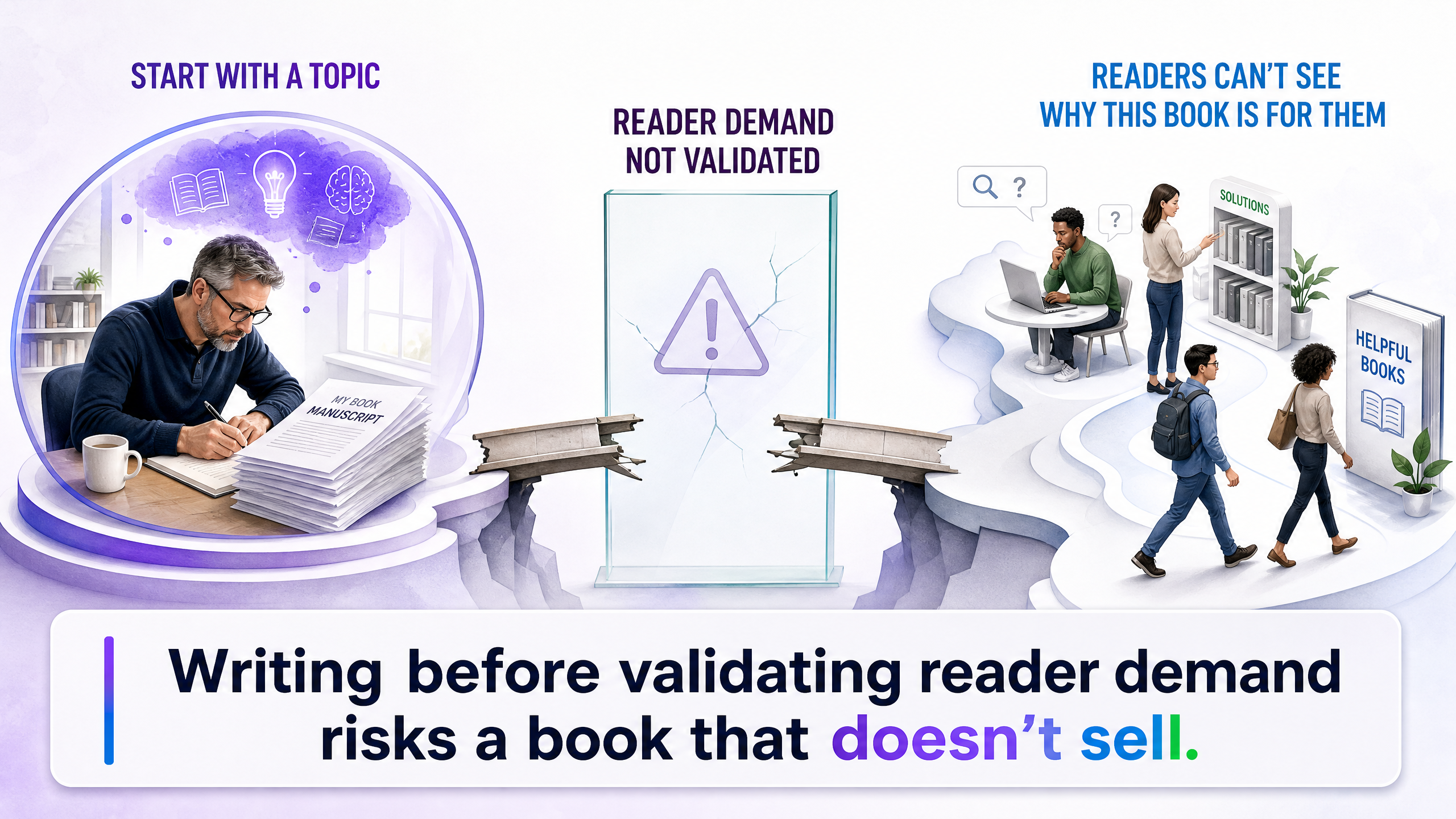
Most nonfiction authors sit down to write before they know, with any real certainty, who will read the finished book. A topic feels important, an outline comes together, and months later there is a manuscript with no one waiting for it. Readers do not simply browse for what an author hopes to explain. They search for answers to problems and goals that matter to them now.
Why writing first can fail readers
A book written before its reader is identified can end up serving the author’s need to explain a topic rather than a reader’s need to solve a problem. When the reader is unclear, decisions about chapters, examples, language, and the promise of the book are all more likely to rest on guesswork.
Clarifying the reader before drafting a page gives the work a reference point. Instead of trying to appeal to everyone who could possibly benefit, the author can create around a real problem, desired change, and next step that a specific reader recognizes.
What makes an audience buyer-ready
A buyer-ready audience is not a demographic slice or a made-up character with a name and fictional interests. It is a specific segment of readers who recognize a real problem or desired change, understand why it matters now, and have already spent time, money, or energy trying to solve it.
Recognizing a problem that matters now
Timing changes how a reader responds to a book. Someone casually curious about better sleep behaves differently from someone who has not slept through the night in months and is actively looking for answers. The second reader has urgency: the problem occupies real space in their day, and a book that speaks directly to that urgency has a meaningful reason to be considered.
A broad interest in a topic does not guarantee readiness to act. The reader worth prioritizing is the person for whom the problem or goal has relevance today and who is already looking for a solution worth exploring.
Evidence over assumptions
Professional experience and conversations can make assumptions feel true, but they need testing. A stronger approach starts with evidence: what readers are searching for, what they say in relevant forums, what they have tried, and where they still feel stuck. Real search terms, real questions, and real conversations reveal information that an invented avatar cannot.
This evidence-first approach also helps separate enthusiasm for a topic from genuine buying readiness. A reader may like a subject in theory while having no immediate reason to purchase a book about it.
Where demographic avatars fall short
Demographic avatars can be useful for imagining tone and voice. The limitation begins when they are treated as a stand-in for actual buying behavior. Demographics describe who someone is on paper; they do not explain why that person would pick up a particular book.
Same demographics, different buying triggers
Two people can share an age bracket, income range, or job title and still have completely different goals, problems, and reasons for buying. One person may be looking for a leadership book because a new role has created an immediate challenge; another with the same demographic profile may have no interest at all because their priorities lie elsewhere.
Describe a reader—or predict one?
There is an important difference between describing a reader and identifying a reader who is actively looking for help.
- A demographic avatar describes a general reader. It can help early brainstorming around voice and context.
- A buyer-ready reader profile uses questions, searches, past solution attempts, and market signals to identify the kind of person who has a relevant reason to pay attention now.
Turn reader clarity into a better book
Once the reader comes into focus, the book itself can become easier to write. Every chapter decision has something to check against: does this serve the person who is already trying to solve this particular problem?
Name the problem in the reader’s own words
Readers respond to language that mirrors their own thinking. Author-facing language often needs translation before a reader recognizes it as their experience. Naming the problem and desired outcome in the language readers actually use can help a book feel personally relevant rather than merely informative.
That clarity also becomes raw material for later book descriptions, headlines, and content. The book and its marketing can then speak from the same understanding of the same reader.
Carry insight into chapters and marketing
The reader insight that shapes the opening chapter should carry into the final page and the communication around the book. A consistent thread—from the problem named early to the path offered later—helps readers understand what the book is for and whether it fits their situation.
Practical ways to find your readers
Clarity about a buyer-ready reader does not come from imagination alone. It comes from research, testing, and a willingness to let evidence challenge a comfortable assumption.
Research real questions and searches
Begin by looking at what a potential reader is already asking out loud in the places they turn for answers. Useful signals can include:
- Questions people frequently type into search engines around the book’s core topic.
- Discussions in relevant communities, forums, and comment sections.
- Recurring phrases readers use to describe their problem or desired change.
Test assumptions with live audiences
No assumption about a reader should stay untested for long. Search interest, live conversations, topic response, comparable titles, and reviews of solutions that did not work can all help an author test whether the reader they have in mind is truly there.
Clarity before the first chapter
A book built around a buyer-ready reader has a clearer reason to exist from the beginning. The reader recognizes the problem, understands why it matters, and is already looking for some form of help. The author has a more useful guide for the book, its message, and the work that can grow from it.
Before refining another demographic avatar, ask a more demanding question: Who is this book really for, and why does it need to exist now?
A practical next step
Start with the reader before you write the next chapter.
The free Page-Turner Playbook helps authors clarify the reader, transformation, and method that give a book a meaningful place to begin.
Get the free Page-Turner PlaybookSource record: published through the 6-Figure Book Business Blog Posts RSS feed on Tue, 08 Sep 2026 16:00:50 -0700. This permanent Library edition adapts the supplied source text for 6FBB.com.